What happens when a playground is designed around how children actually experience the world, rather than simply how they are expected to play?
The need for inclusive play spaces is significant. The Australian Bureau of Statistics reported that 946,300 Australians aged 0 to 24 were represented in its 2022 disability data, with 67.8% of those children and young people needing support with at least one everyday activity.
At Sensory Play Centre, we recognise that meaningful play requires more than a collection of equipment. Our sensory play centre in Ravenhall is designed around accessibility, sensory needs and different ways of participating.
Here is what goes into creating a sensory playground that works for every child.
It Starts With the Layout
A standard play centre may focus on fitting as much equipment as possible into one area. We take a different approach.
Our layout considers how children move, pause, interact and transition between activities. Clear pathways and thoughtfully arranged play zones help reduce unnecessary congestion while giving children room to participate at their own pace.
We consider:
- Accessible routes between key play areas
- Different activity zones rather than one crowded space
- Opportunities for movement and physical activity
- Areas where children can take a break from stimulation
- Visibility for parents and carers
- Space for different forms of play and interaction
This planning helps create a sensory playground where children are not required to use one particular method of play.
Equipment With a Purpose
Sensory equipment is not simply selected because it looks exciting. Each feature should provide an opportunity to engage one or more senses while supporting movement, coordination, concentration or social interaction.
Depending on the activity, children may encounter:
Movement-based play
Climbing, balancing, swinging and other physical activities can provide opportunities for body awareness and motor development.
Tactile experiences
Different textures and materials give children opportunities to engage through touch and discover what feels comfortable to them.
Visual and auditory input
Colours, patterns, sounds and movement can provide additional sensory experiences, while the overall environment is arranged to avoid unnecessary overload.
Accessibility Is Part of the Design
An inclusive playground should not simply add accessible equipment to an existing layout. Accessibility needs to influence the entire space.
We consider how a child using mobility equipment can reach an activity, how a carer can provide assistance, and whether children with different communication, movement or sensory needs can participate alongside others.
That is what separates an inclusive sensory playground from a standard play centre.
Why the Details Matter
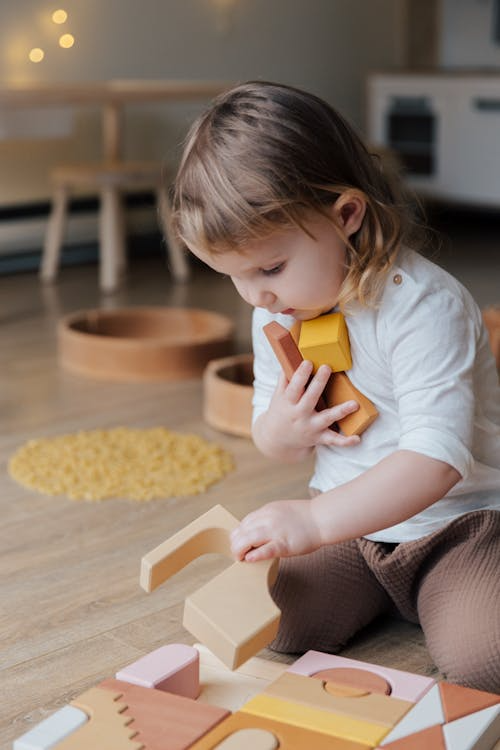
Image Link:
Image Filename: child-holding-wooden-blocks.jpg
Image Alt-Text: Child holding wooden building blocks in their hands
Image Caption:
So, what makes a sensory playground genuinely inclusive?
It is the combination of purposeful equipment, accessible pathways, flexible play opportunities and an understanding that every child interacts with their surroundings differently.
At Sensory Play Centre, we have created our space with those principles in mind. Our sensory playground is designed to give children opportunities to move, touch, listen, interact and play in ways that suit them.
If you are looking for a sensory play centre in Ravenhall where inclusive design is central to the experience, contact Sensory Play Centre to learn more about our facilities and private hire options. We are here to help families find a play environment designed with every child in mind.